
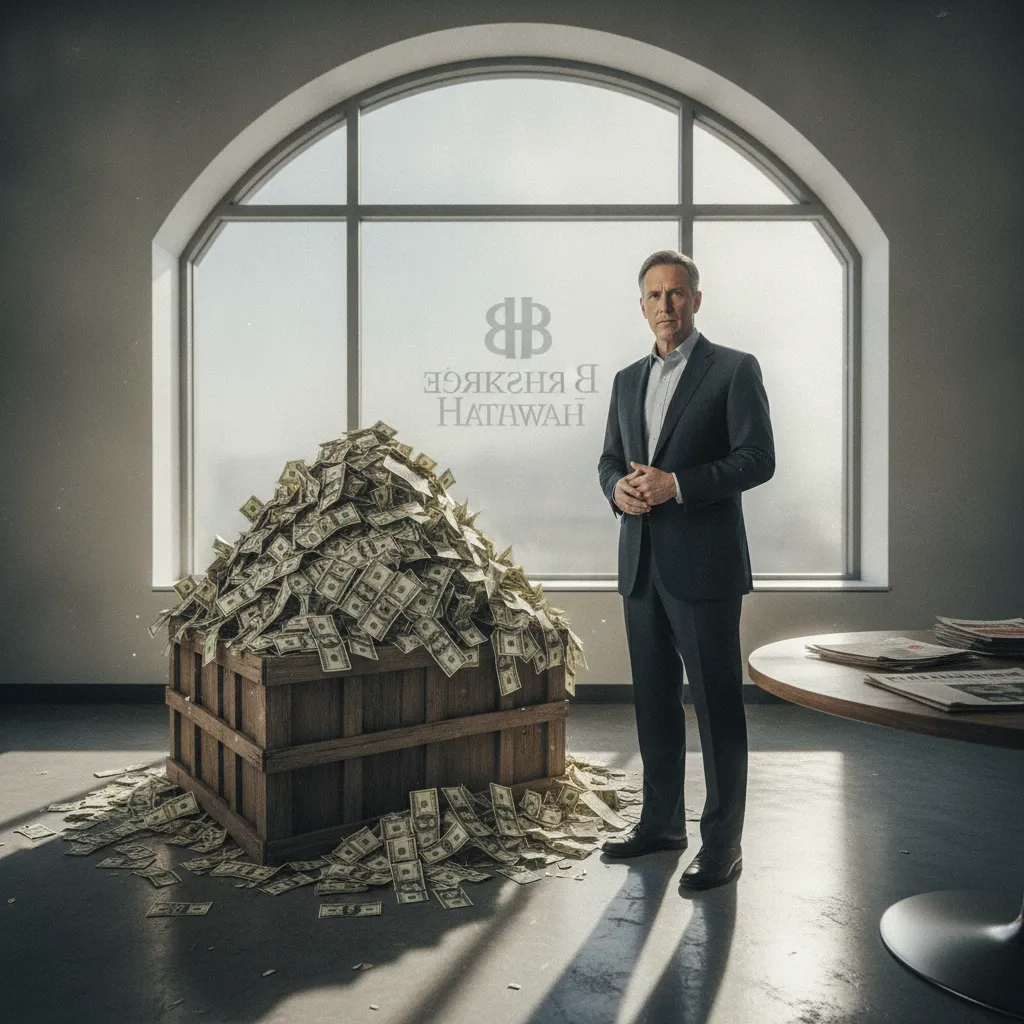
Wall Street is currently grappling with a loud, silent alarm triggered by the latest financial disclosures from Berkshire Hathaway. Under the leadership of Greg Abel, who took over day to day operations following Warren Buffett’s retirement, the conglomerate has allowed its cash reserves to swell to a staggering 377.4 billion dollars. While a massive mountain of liquidity typically suggests strength, in the context of Berkshire’s history, it serves as a stark warning. The firm that built its empire on opportunistic acquisitions and strategic investments is suddenly choosing to sit on the sidelines rather than deploy its capital.
The numbers reveal a consistent pattern of caution that spans nearly four years. According to recent operating results, Berkshire has been a net seller of stocks in fifteen of the last sixteen quarters. Even as they reported a healthy 12.7 billion dollar operating profit for the third quarter, the decision to sell more equity than they bought underscores a deep seated reluctance to enter current markets. To many analysts, this behavior indicates that the leaders of Berkshire simply cannot find anything worth buying at today’s prices.
At the heart of this hesitation is a strict adherence to value investing, specifically guided by what experts call the Buffett indicator. By comparing total market capitalization to US GDP, this metric reveals whether stocks are overpriced relative to economic output. Currently, this indicator sits far above its historical average, recently hitting peaks that surpass even those seen during the dot com bubble and the global financial crisis. For Abel and Buffett, these figures suggest that the market has become historically expensive and fundamentally detached from reality.
By hoarding hundreds of billions in cash and treasury bills, Berkshire is effectively betting against the sustainability of current valuations. While timing a market crash is notoriously difficult, history suggests that such extreme premiums eventually correct themselves. Until then, Berkshire appears content to wait in the wings with enough firepower to potentially acquire hundreds of S&P 500 companies should a significant downturn finally arrive.