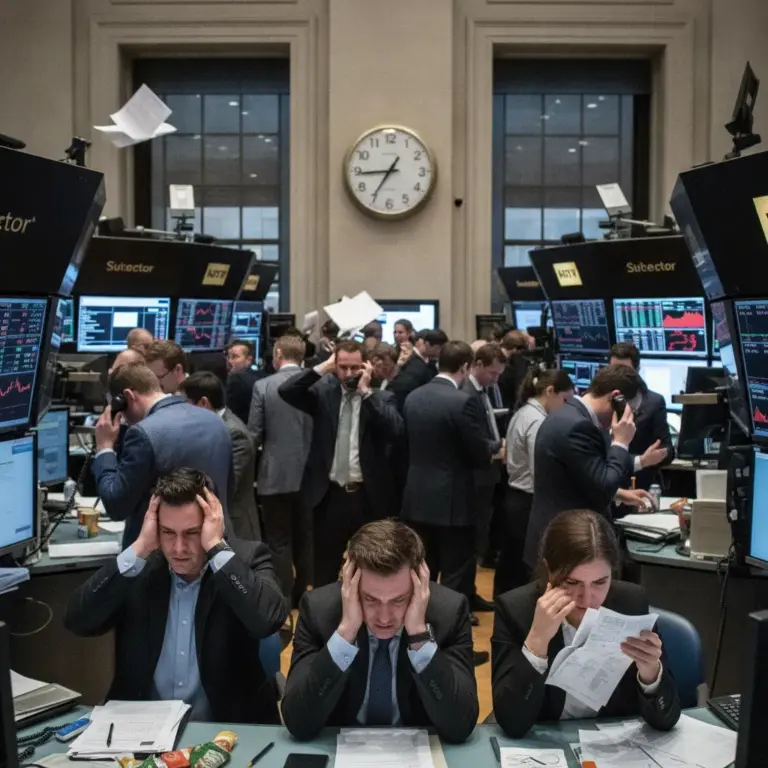

The honeymoon phase for artificial intelligence stocks is facing a harsh reality check as a recent wave of selling leaves many investors wondering if the worst is yet to come. With the Nasdaq 100 recently sliding over six percent, some experts warn that this isn’t just a temporary dip but rather the beginning of a deeper shakeout. Analysts point to several red flags, ranging from doubts about how these companies will actually make money to the massive costs associated with building data centers and the precarious financial health of major players like OpenAI and Anthropic.
For those who aren’t ready to abandon technology entirely but fear further losses, professionals suggest shifting toward higher quality names. Strategists at Piper Sandler recommend focusing on companies with strong free cash flow and high returns on equity rather than chasing raw growth. This flight to quality leads them toward established firms like Adobe, Salesforce, and Accenture, which may offer more stability while still providing exposure to the digital evolution without the extreme volatility of speculative AI plays.
Other veteran investors are suggesting a complete departure from the hype cycle in favor of traditional value stocks and unglamorous industries. Bill Smead of Smead Capital Management has found success by avoiding AI altogether, instead leaning into undervalued sectors like homebuilding through companies such as DR Horton and Lennar. Similarly, advisors at First Horizon Wealth Management and UBS are encouraging portfolios to diversify into boring but steady bets, specifically mentioning energy, financials, healthcare, and industrial stocks that haven’t been inflated by tech mania.
As a final layer of defense against market swings, some institutions are advising clients to increase their allocations in bonds. While banks like UBS believe the AI sector will eventually rebound, they suggest that high quality bonds with short to medium term maturities can provide essential income and protection during periods of instability. By blending defensive fixed income with non tech equities, investors hope to weather the storm until the actual profitability of the AI revolution becomes clearer.